
Football in Africa: why does this continent fascinate the world?


In Senegal in 1890, French teams played the first ever football match on African soil. No one imagined at the time that this moment would set in motion one of the greatest greatest sporting epics of human history. This round ball, imported by the colonizers, was to become the symbol of an identity, resistance and pride that nothing has been able to erase since.
We've been following the sport's development closely for years, and with every trial, every young talent we observe, we see this living legacy in their eyes. African football is not just a game. It's a transmission.
From colonial roots to a strong African sporting identity
The introduction of football on the continent was uneven, depending on the colonial powers. The British colonies allowed the local population to practise rapidly, The French Empire maintained strict segregation until the 1920s, considering the game “too complicated” for the natives. Yet this initial divide produced a remarkable cultural resistance.
Arthur Wharton, born in Ghana in 1865, was the first black professional player in history. His career in England opened the door to a new era. A few decades later, Larbi Benbarek joined Olympique de Marseille in 1938, These pioneers didn't just play football - they carried an entire continent on their shoulders. These pioneers didn't just play football - they carried an entire continent on their shoulders.
The clubs founded during this period quickly became symbols of national resistance. Here are some of the most emblematic:
- Espérance sportive de Tunis - Tunisia, founded in 1919
- African Club - Tunisia, founded in 1920
- Mouloudia Club d'Alger - Algeria, founded in 1921
- Wydad Athletic Club - Morocco, founded in 1937
In 1956, a match between independent Tunisia and colonial France marked a major symbolic turning point. Every victory on the pitch became a political victory, This was the beginning of a new era of football in Africa, with emerging nations asserting themselves to the world. African football was beginning to write its own story.
The Africa Cup of Nations and the rise of global power
The first African Cup of Nations was held in Khartoum in 1957. Only three teams took part - Egypt, Sudan and Ethiopia. The Pharaohs won the inaugural title, This was the start of a competitive tradition that has never been interrupted. Today, the tournament features 24 teams and is one of the most closely followed continental competitions in the world.
Some finals remain etched in the collective memory. The 1992 final between Côte d'Ivoire and Ghana lasted until the final whistle. 22 penalty attempts before the Ivorian victory - an absolute record. Zambia, in 2012, delivered an emotional victory exactly 19 years after the air tragedy that decimated their national team in 1993. These moments go far beyond sport.
| Year | % African coaches at the helm | Evolution |
|---|---|---|
| 2015 | 19 % | Reference base |
| 2020 | 38 % | +100 % |
| 2022 | 52 % | +174 % |
On the world stage, African progress was hard won. In 1966, African nations boycotted the qualifiers to protest against the injustice of a single place shared with Asia and Oceania. This courageous gesture bore fruit in 1970. Africa got its reserved place, with Morocco as the first direct beneficiary. Today, nine places are allocated to African teams for the World Cup - a result snatched away, not offered.
George Weah remains to this day the only African to have won the Ballon d'Or. Morocco's achievement in 2022, as the first African nation to reach the semi-finals of a World Cup, definitively changed international perception. We've seen youngsters at our scouting sessions imitating the moves of Sofiane Boufal or Achraf Hakimi - it's a real eye-opener. these champions directly inspire future generations.
Academies, training and the future of African football
The real work of African football is now being done outside the stadiums. Academies of excellence radically transform the training of young talent. The Mohammed VI complex in Morocco or the structures linked to the PSG Academy Pro offer comprehensive methods, integrating physical, mental and tactical development.
In Senegal, the FIFA project led by Lamine Guèye uses innovative technological tools to fine-tune daily sessions. Video analysis and real-time data enable coaches to adjust their tactical choices directly from the bench. We apply these methods ourselves to evaluate profiles on our scouting days.
Visit CAF launched an Executive Certificate in Football Management in partnership with the University of Cape Town, with a success rate of 100 %. This program symbolizes the Group's commitment to structuring continental development on a long-term basis. Only 15 % of youth infrastructure meets international standards - there's still a long way to go, but the direction is clear.
The average length of a coaching mandate in Africa rarely exceeds 18 months. This instability hampers the construction of coherent long-term projects. Yet technicians like Hervé Renard or Hugo Broos have shown that a rigorous method, adapted to local realities, produces tangible results. The alliance between international expertise and in-depth cultural knowledge is today the most effective formula for advancing selections.
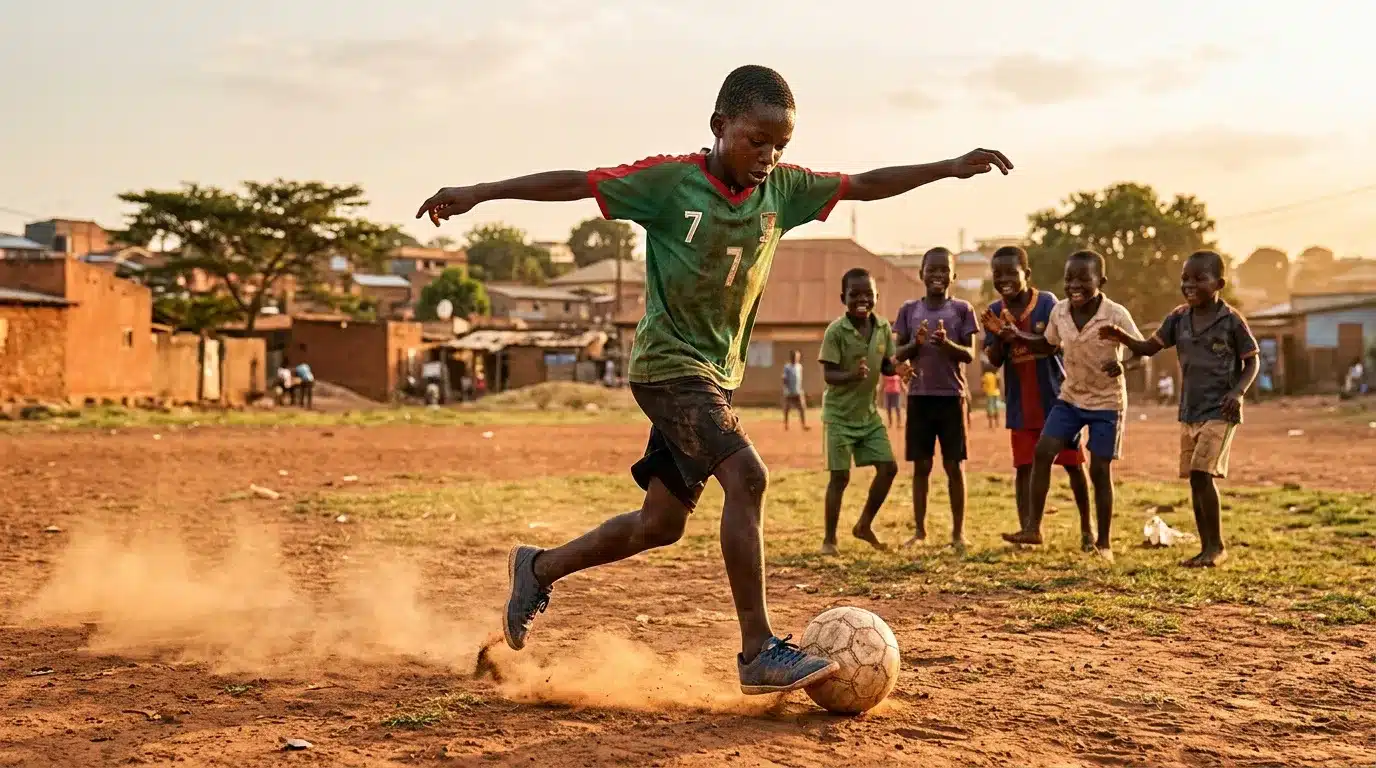
Every talent spotted at a training centre, every kid training barefoot on a laterite pitch - they're the living extension of an epic that began over a century ago. African football no longer waits for permission to exist. He is now setting the pace worldwide.