




Understanding the football recruitment process
Visit football recruitment is a decisive step in building a high-performance workforce. Whether within a training center, It is based on a well thought-out organization designed to identify, assess and support the best profiles.
In this sport, nothing is left to chance. Behind every signature lies a profound work of observation, analysis and patience. Understanding how all this works is essential for anyone who wants to break through, whether it's a young person dreaming of turning professional, or an organization looking to build a solid, sustainable project.
This work mobilizes several players: scouts, player agents, trainers and sometimes partner structures. Our role is to streamline the whole process, by proposing pre-qualified profiles, a database and personalized support every step of the way.
The major players in recruitment
Sports recruitment is based on several pillars:
- Football clubs, looking for reinforcements for their workforce.
- Scouts, whether independent or in-house, scour the countryside in search of nuggets.
- Players' agents, who defend their interests and negotiate the best opportunities.
- Specialized platforms like ours, which make it easier to put people in touch with each other and analyze their files.
This pattern can be found all over France, from small regional championships to the structures monitored by the FFF. Each département has its own breeding grounds, and many local clubs serve as springboards to the elite.
Key stages in the recruitment process
Successful recruitment follows a rigorous methodology:
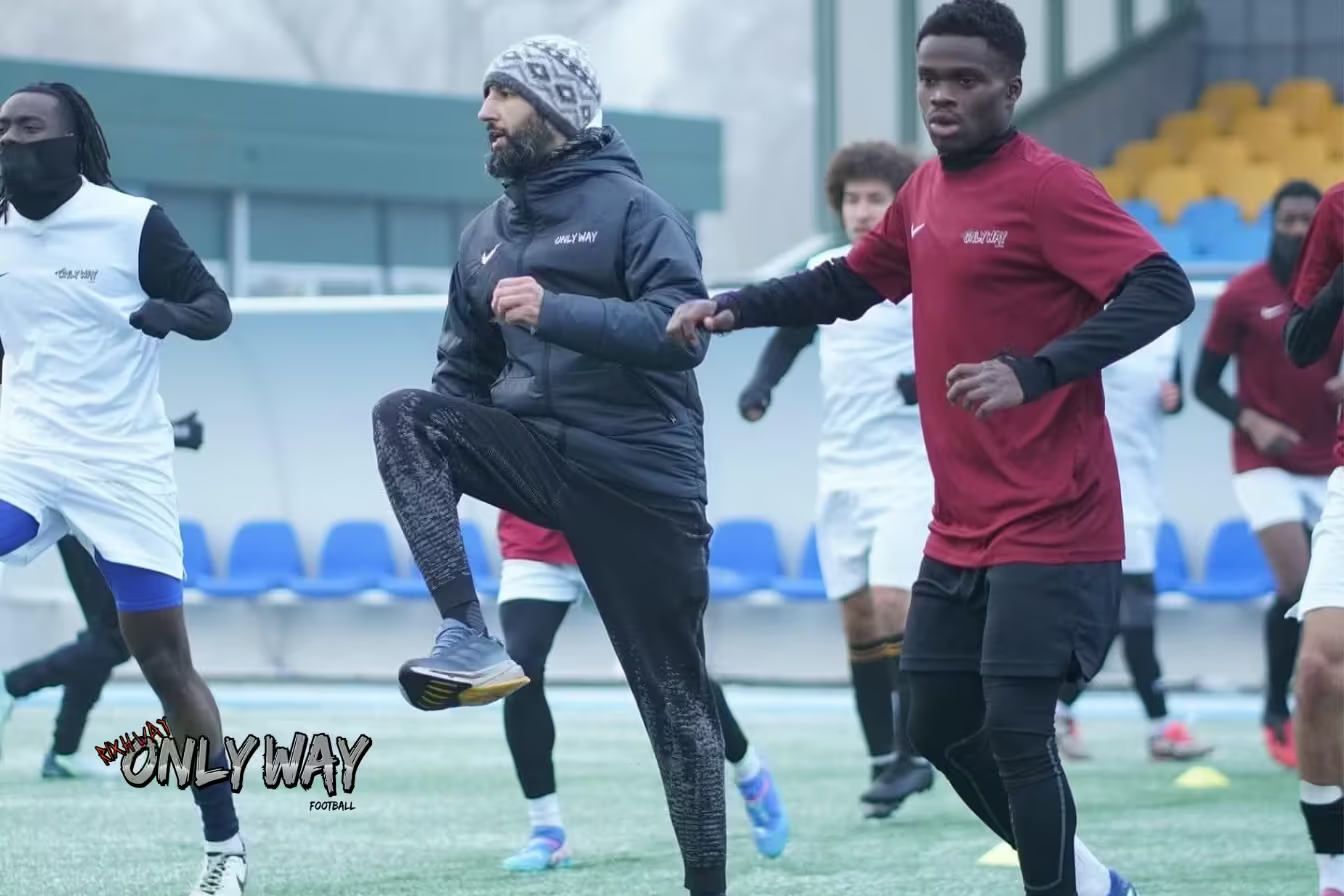
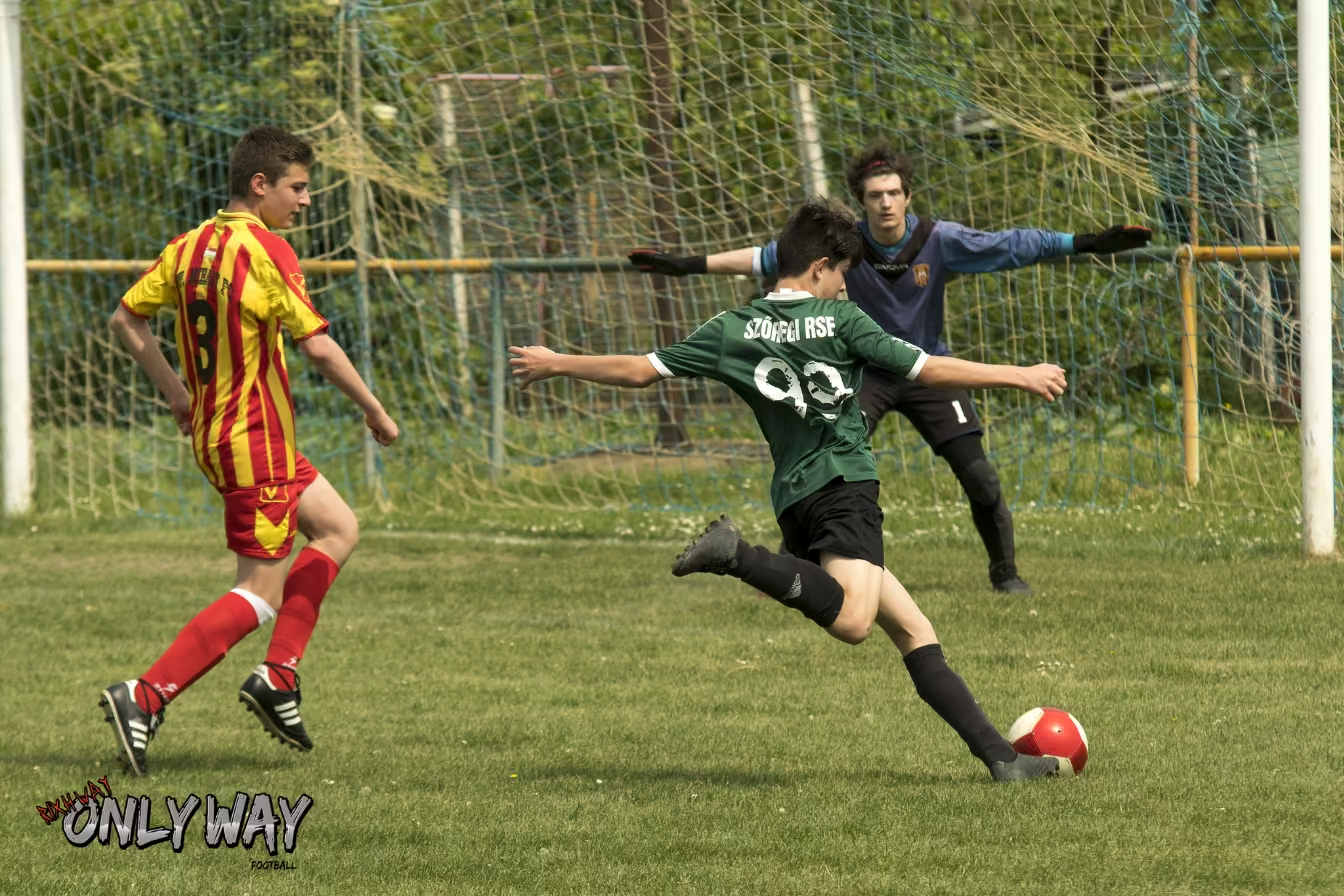
- Observation in the field, at tournaments, local championships or regional selections.
- Technical and mental analysis of the player, beyond a simple performance.
- Assessment of compatibility with the proposed sports project.
- Contacting agents or families.
- Contract signed and integration into the structure.
Every step counts. A player can shine in one match and disappoint in the next: it's consistency over several matches that really makes the difference. This work often takes place behind the scenes, but it determines a player's future.
Spotting young talent
Trial remains a major lever in sports recruitment. As early as adolescence, some footballers show great potential. Visit training centers therefore need to sharpen their eye for raw talent, beyond a one-off performance.
Spotting promising youngsters early on enables us to support them over the long term and offer them the right framework for their development. That's what's at stake with a well-constructed scouting strategy, based on several seasons rather than a single match.
Importance of training centers
A training center is more than just training It structures the young person's career path, provides a framework, manages their license and helps them to move up the career ladder. This is often where a future professional is revealed. It's a job that takes time, observation and full monitoring throughout the season.
The trainer plays a central role. On a daily basis, he steers training, corrects details and mentally prepares each hopeful for competition. Managing playing time, injuries and confidence is an integral part of his mission. An attentive coach is quick to spot the qualities that will make the difference tomorrow.
How scouts identify future talent
Scouts identify new recruits at matches and training courses. During the event, the scout observes the placement, and attitude to pressure. Many football trials now take place via online platforms or a dedicated application, where each youngster submits their video and responds to recruitment ads posted by the teams.
Not all positions are equally attractive on the market. A fast central defender, a creative midfielder or an effective striker in front of goal often attract the most attention. But every position has its value, and a keen eye can spot a player's potential whatever his role on the pitch. That's also why high-quality individual coaching is irreplaceable.
The role of players' agents in recruitment
The player agent is an indispensable facilitator. He doesn't just negotiate contracts: he follows the player, builds his career strategy and puts him in touch with the right people. A large part of his job is based on trust and in-depth knowledge of the market.
Agents' influence on footballers' careers
An experienced agent knows when and where to develop his player. He acts as a strategic advisor throughout the process. That's why we also support agents in their recruitment work, providing them with profiles, useful analyses and connections.
An ill-prepared transfer can put the brakes on progress, while a well-considered choice can speed things up. The agent must therefore anticipate and keep a clear vision of future opportunities, sometimes several years in advance.
Criteria for selecting agents to represent a player
Agents select players according to several criteria:
- Progress potential.
- Seriousness and discipline.
- Family background and stability.
- Mental attitude to pressure.
We offer profile pre-assessment tools, useful at this decisive stage. Properly evaluating a player before accompanying them avoids disappointment, both for the player and for the host organization.
The impact of recruitment on football clubs
When a player is truly integrated, it advances an entire sports project. He then becomes a valuable asset. We always come back to the same idea: the importance of a clear strategy and rigorous follow-up.
Successful recruitment not only boosts sporting results, but also the structure's image and finances. On the other hand, a mistake can be costly and weaken an entire project for several seasons.
Recruitment strategies at major clubs
High-level structures invest in:

- International scout networks.
- Partnerships with academies.
- Data scouting tools.
- Solid contacts in the field.
We make these practices available to even the most modest structures. Teams can also post their recruitment offers and advertisements to broaden their pool of talent and identify undiscovered hopefuls.
The market no longer stops at borders. Many clubs are now looking for rare pearls abroad, in countries where the breeding ground is immense but still little explored. Keeping abreast of what's going on elsewhere in the world is an integral part of modern business.
Detecting a player in another country requires a reliable address book and a good knowledge of the local terrain. It's also a fantastic opportunity for up-and-coming players from less publicized regions to make their way to the top. The world of football has never offered so much bridges between countries. This openness benefits both structures and ambitious hopefuls, provided they remain patient and well supported.
Case study: recruitment success at well-known clubs
Recruiting a talented footballer is not a matter of chance. Several French and European clubs have opted for lesser-known players, spotted early thanks to an efficient scouting network.
If N'Golo Kanté is a world-class player today, it's because he came to the attention of Boulogne (National) and then Caen (Ligue 2) at a late stage, thanks to local scouts who were well acquainted with the Ile-de-France breeding ground. As for Ousmane Dembélé, he was identified very early on by Stade Rennais via a very active regional trial unit. These stories show that, with the right method, a club can reveal nuggets that no one expected.
A course can take off in an instant, and it all depends on you. Today, knowing how to play isn't enough: you also need the right person to reveal you. Don't let the nuggets pass you by. Call on a trusted partner for your football recruitment.
❓ Frequently asked questions (FAQ) about recruitment and talent scouting
🔹 How do football trials work?
They enable new talent to be spotted during matches or organized training courses. They are often open to young people, both amateurs and club members, who wish to join a team or an academy. The scout then assesses each person's technical, physical and mental profile.
🔹 What is a trial tournament and what is it for?
A tournament of this type brings together several players who compete in front of observers. Partner teams and training centers analyze performance in a competitive environment. These events are often the first contact between a hopeful and a professional structure.
🔹 What are the selection criteria for football recruitment?
Important criteria include level of play, current contract or availability, family background and mental state, as well as adaptability to the sports project. Each profile is studied as a whole, not just in terms of isolated performance.
🔹 How important are partner clubs in recruitment?
Partner clubs play a strategic role They act as intermediaries between U23s and the elite. This partnership brings promising profiles to the fore, particularly in regional leagues and less publicized championships.
🔹 How does a player get scouted without an agent?
Participate in testing, sign up for targeted training courses, Sending sports CVs to teams or centers and responding to recruitment offers and advertisements are effective ways of doing this. Staying active on social networks also helps gain visibility. Some platforms even offer an application to apply directly. Having a license with a local team also makes the first steps easier.
🔹 Do you need a sports CV to make a name for yourself?
Yes, a clear, up-to-date sports CV is an asset. It should show your background, statistics, strengths and contact details. You should also create an online space where you can put together a few videos of matches: this helps an observer to form an initial idea before even seeing you play.
🔹 How can I keep up to date with the latest news and recruitment offers?
To make sure you don't miss a thing, check the sports news regularly, follow the latest transfers and keep an eye on available offers. Many organizations list current job vacancies and allow you to apply in just a few clicks. Once again, keeping up to date is part of the game.
🔹 Does women's football offer the same scouting opportunities?
Yes, women's football is booming in France, and the number of selections is increasing all the time. Young players now have real opportunities through local structures, regional leagues and open trials, with their own recruitment ads.
🔹 Does timing really matter in a sporting career?
Enormously. In professional football, everything can change in an instant. Be physically and mentally ready at the key moment, This is why it's so important to have a well-prepared project. Hence the importance of a well-prepared project and trusting support, from the first attempt right through to signing.
🔹 How long does a recruitment process take?
It all depends on the context. A transfer can be completed in a matter of days if an agreement is reached quickly, but it can take several seasons before a promising player is signed. Scouts often prefer to observe a player over time, at several tournaments and meetings, We don't want to rely on a single achievement. Patience remains an essential quality, both for the player and for the organization that supports him on a daily basis.
🔹 Do I have to pay to take part in a training course or trials?
This varies according to the organizer. Some scouting sessions are free and open to all, while private courses may be subject to a charge. Beware of overly attractive offers A serious partner never promises a contract in exchange for money. Always ask about the organizer's reputation, and give preference to opportunities offered by recognized structures or academies, where your work will be truly valued.